• Blog
    • Books
    • Contact
    • Home
    • Origin Story
    • The Proverbs Series

Raychel Writes

  • Wisdom from the Word Day 6

    January 6th, 2026

    Proverbs Chapter 6 — Fleshing it out for My Understanding

    Working through Proverbs 6 today, and I’m seeing more clearly that this is still a father speaking to his son — the kind of letter you’d hope every young man would read before he signs a loan, chooses his habits, or guards his heart.

    The opening verses about becoming surety for your neighbor (6:1–5) felt confusing to me at first. I wondered if it meant, “Don’t sleep until the debt is paid.” But I think the deeper point is this:

    God cares about stewardship. If I promise what I cannot reasonably cover, I may lose the very household the Lord told me to protect. Jesus taught the same spirit when He said to count the cost before you build (Luke 14:28). My kindness must never outrun wisdom.

    Then the chapter points to the ant (6:6–11). That little creature preaches louder than any motivational speaker. The warning isn’t just “don’t be lazy”; it’s that sloth steals from the future God prepared for me.

    Work was God’s idea first — Adam tended the garden before sin ever entered (Genesis 2:15). Paul echoes it plainly: “If a man will not work, neither shall he eat” (2 Thessalonians 3:10).

    I also notice how God describes the worthless man (6:12–15) and the seven things He hates (6:16–19):

    haughty eyes, lying tongue, hands that shed innocent blood, a heart that devises wicked plans, feet quick to run to evil, false witness, and — the climax — one who sows discord among brothers.

    And can we just pause and laugh a second? 😂

    The internet today yells “6-7!” like it means absolutely nothing, but God used those numbers first. He was the original 6-7 referencer — and He used it to talk about what He despises. That’s a little comical and ironic, and honestly it made me smile at the kitchen table this morning.

    The longest section returns to faithfulness in marriage (6:20–35). Culture may joke about pop lists, but God used marriage language before anyone else. Lust toward another person is painted as a trap — darker than theft. A thief can repay, but an adulterer destroys his own soul.

    Jesus intensifies this truth in Matthew 5:27–28 — sin begins in the heart before it ever shows in the hands.

    There’s a thread connecting all of it:

    boundaries in money, diligence in work, truth in speech, and purity in marriage all protect the same sacred thing — the household and the covenant people of God.

    I don’t want to be a burden on my community; I want my diligence to bless it. That idea is biblical too — 1 Timothy 5:8 calls us to provide for our own, and Galatians 6:5 reminds each of us to carry our own load so we can freely help bear another’s when real need comes.

    Takeaways in My Heart

    Gazelles escape snares → so should I when promises are foolish. Ants plan quietly → faithfulness needs no platform. God hates discord most → unity is sacred. Marriage mirrors covenant → lust is spiritual rebellion.

    Lord, help me heed the teaching You gave us and not fall into the trap of sin and evil. Here I am, Lord — teach even my habits to walk upright.

  • Day 5 Proverbs 5 — The Wisdom of Heeding the Warning

    January 5th, 2026

    Proverbs 5 is sobering in its honesty.

    It does not soften the reality of temptation, nor does it pretend that sin appears ugly on the front end. Instead, Scripture names what we all know to be true but often resist admitting: what is forbidden can be alluring, persuasive, and sweet for a moment. The danger is not that temptation lies to us—but that we listen.

    This chapter is a father’s warning to a son, and it is plainly about adultery. The language is not symbolic at first glance. It is direct, practical, and grounded in real-life consequences. The adulterous woman is described as smooth-talking and desirable, but the end of that path is bitterness, loss, and regret. Wisdom is not abstract here; it is painfully concrete.

    One of the most striking elements of Proverbs 5 is that regret is given a voice. After the damage is done, the speaker looks back and mourns not just the sin itself, but the refusal to listen when instruction was available. “I hated discipline, and my heart despised reproof.” The tragedy is not ignorance—it is rejection of wisdom that was already offered.

    What stands out to me is that Scripture does not condemn desire. In fact, Proverbs 5 does the opposite. It celebrates desire rightly ordered. Faithfulness within marriage is described as joyful, intoxicating, and life-giving. The problem is not passion—it is passion detached from covenant. God’s wisdom does not call us away from love or intimacy, but toward a love that is protected, exclusive, and enduring.

    Marriage is treated with such gravity here because it is not merely emotional or contractual—it is covenantal. To violate that covenant is to invite destruction, not because God is withholding joy, but because He is guarding it.

    Later in Scripture, we will see this covenant language deepen. The marriage relationship becomes a picture used by God to describe His faithfulness to His people and His people’s faithfulness—or unfaithfulness—to Him. Israel’s idolatry is called adultery. The Church is described as the Bride of Christ. But it is important to recognize that Proverbs 5 is not making that theological argument explicitly yet. This is wisdom literature dealing first with obedience in daily life.

    Still, the echo is there. Human covenant faithfulness matters because it reflects something greater. The way we treat covenant—with God and with one another—reveals what we believe about trust, loyalty, and love. Faithlessness in marriage and faithlessness in worship are not identical, but they grow from the same root: a refusal to trust God’s design over our own desires.

    Proverbs 5 ultimately teaches us that sin promises freedom but delivers regret. Wisdom, on the other hand, may feel restrictive in the moment, but it preserves life, joy, and peace. God’s warnings are not threats; they are acts of mercy. He speaks before the fall, not after, because He loves us.

    The question this chapter presses on my heart is not simply, “Will I avoid obvious sin?” but rather, “Will I listen while instruction is still being offered?” Regret speaks loudly in Proverbs 5—but wisdom was speaking first.

    Obedience now is a kindness to our future selves. And correction, though uncomfortable, is one of the clearest signs of God’s love.

  • Wisdom from the Word Day 4

    January 4th, 2026

    Proverbs 4 does not stand alone; it is a continuation of the invitation begun in Proverbs 3. If Proverbs 3:5–6 establishes the heart posture—trusting the Lord with all your heart, leaning not on your own understanding, submitting to Him—then Proverbs 4 shows us what that posture looks like lived out with our feet on the ground.

    The wisdom of Proverbs 4 is not abstract. It is directional.

    “Let your eyes look straight ahead;

    fix your gaze directly before you.” (Proverbs 4:25)

    This is not a call to self-focus or personal determination. It is a call to fixed attention—eyes no longer darting between competing voices, desires, or fears. The straight path only remains straight when our eyes are fixed on the One who defines it. Proverbs 3 tells us who we trust; Proverbs 4 tells us how we walk once we do.

    The narrowness of the path is intentional. Scripture never presents wisdom as the easiest way—only the right one. Jesus echoes this same truth when He teaches that the gate is narrow and the way is hard that leads to life, and that few find it. This narrow path is not narrow because God is withholding; it is narrow because it is guarded. Guarded from the chaos of self-rule. Guarded from the deception of the flesh. Guarded from paths that feel right but ultimately lead to destruction.

    This is why Proverbs 4 warns us not to turn to the right or the left. Deviation rarely begins with the feet—it begins in the heart. When wisdom loosens its hold on us internally, our steps soon follow externally.

    That is why the command to guard the heart sits at the center of the chapter:

    “Keep your heart with all vigilance, for from it flow the springs of life.” (Proverbs 4:23)

    Scripture consistently affirms this truth: the heart is the source, and the rest of life is the overflow. Jesus Himself teaches us that what fills the heart will inevitably make itself known when He says,

    “For out of the abundance of the heart the mouth speaks.” (Matthew 12:34)

    Our words are not accidental. They are not random. They are reveals. What overflows from the mouth first took root in the heart—whether wisdom or folly, trust or fear, submission or self-reliance. Jesus reinforces this again when He explains that a good person brings forth good out of the good treasure stored in the heart, and the opposite is equally true.

    This is why Proverbs is so insistent that the heart be guarded above all else. If the heart is left unkept, the mouth will testify to it. If the heart is shaped by wisdom, the fruit will follow.

    Here is where Proverbs 3 and Proverbs 4 meet so beautifully. Trusting the Lord with all your heart is not passive. It requires attentiveness, humility, and daily surrender. Fixing our eyes straight ahead is not about strength of will—it is about submission of sight. Whom we look to determines where we walk.

    And the promise woven throughout Scripture is this: when our eyes are fixed on the Lord, when our hearts are yielded to His wisdom, and when our steps follow the narrow way—He makes the path straight. Not always easy. Not always comfortable. But always good.

    This is the way of wisdom.

    This is the path of life.

  • Wisdom from the Word Day 3

    January 3rd, 2026

    Proverbs 3 has always been familiar, but today it felt deeply personal.

    Proverbs 3:5–6 has long been an anchor verse for Shaun and me.
    It’s one we return to often, and one I’ve written in countless farewell letters to people we’ve sent out—because it reminds me of something I desperately need to remember:

    my own ways are not trustworthy.

    Left to myself, I can reason well, justify well, and still end up off course.
    Trusting the Lord—fully, humbly, without reservation—and walking in obedience to Him isn’t optional if I desire an upright life.

    It’s essential.

    What struck me anew in this chapter is the intimacy the Lord shares with the upright.
    Scripture tells us that the Lord is intimate with those who walk rightly before Him, and I find myself longing for that closeness—not because it makes life easy, but because He is so good.

    His nearness is not earned by perfection, but enjoyed through surrender.

    Proverbs 3 also speaks about the Lord’s correction, and I’m grateful that it does not shy away from it.
    Correction is not a contradiction of His goodness; it is an expression of it.

    When God corrects, it is never harsh, never careless, and never disconnected from love.
    Even when it’s uncomfortable—even when it humbles me—it is always for my good.

    I see this so clearly through the lens of parenting.
    We correct our children not because we delight in their discomfort, but because we love them too much to let them continue down a path that will harm them.

    In the same way, the Lord disciplines those He loves.
    His correction is evidence of relationship, not rejection.

    Proverbs 3 reminds me that wisdom, trust, obedience, intimacy, and correction are not separate ideas—they are deeply connected.

    To trust Him is to submit to Him.
    To walk uprightly is to remain close to Him.
    And to accept His correction is to rest in the truth that His heart toward us is always good.

    Today, my prayer is simple:

    Lord, help me trust You more than I trust myself.
    Help me welcome Your correction.
    And help me walk uprightly—not to earn Your love, but because I already have it.

  • Wisdom from the Word Day 2 of Proverbs

    January 2nd, 2026

    Proverbs 2 doesn’t treat wisdom as optional or passive.

    It doesn’t say, “If wisdom happens to cross your path…”

    It says receive, treasure, incline your ear, cry out, lift your voice, seek, search.

    This chapter shows us the intensity with which wisdom must be pursued—with the same intention and consistency as someone mining for silver. Not a casual stroll. Not a once-a-week glance. But digging. Reaching. Returning day after day because what’s buried is worth the effort.

    And Scripture is honest here:

    If wisdom is not actively sought, something else will fill the gap.

    The absence of wisdom doesn’t leave us neutral—it leaves us vulnerable. Vulnerable to crooked paths, distorted desires, and voices that sound convincing but lead us away from life.

    Proverbs 2 also shows us something tender and reassuring: wisdom protects before it corrects.

    When we seek it, wisdom guards our steps, sharpens our discernment, and keeps us from paths we don’t yet recognize as dangerous. It doesn’t just tell us what’s right—it keeps us from falling into what would cost us peace, integrity, and joy.

    And here’s the promise woven through the whole chapter:

    When we seek wisdom earnestly, the Lord gives it.

    Not reluctantly. Not sparingly.

    He delights to give understanding to those who ask—and He uses it to preserve, guide, and anchor them.

    Wisdom is not merely knowledge.

    It is protection.

    It is clarity.

    It is a kindness from God for those who are willing to dig.

  • Wisdom from the Word Day 1

    January 1st, 2026

    Every January, I try to start the year the same way—anchored in wisdom from the Word.
    One chapter of Proverbs a day. One month. Thirty-one chapters. A reset for my heart and mind.

    Today I started with Proverbs 1, and what stood out to me is how clearly God defines wisdom from the very beginning.

    Wisdom begins with a proper fear of the Lord—not fear that runs from Him, but reverence that submits to Him. It’s choosing obedience over impulse. Truth over temptation. Discernment over distraction.

    Proverbs 1 also gives a loving but sobering warning:
    Don’t desire evil. Don’t run with people who do.
    Not because we’re better—but because sin always costs more than it promises.

    What really struck me is how wisdom is described as calling out—loudly, clearly, publicly. God isn’t hiding truth. He isn’t whispering it in secret. Wisdom is right in front of us… but some choose ignorance instead. Not because they can’t see—but because they won’t turn.

    If you’re looking for a simple way to begin the year grounded in truth, I encourage you to read Proverbs 1 today. As you do, ask yourself:

    • Am I truly fearing the Lord, or just acknowledging Him?
    • Are there influences I need to flee instead of justify?
    • Where has wisdom been calling—and I’ve been ignoring it?

    God is faithful to give wisdom to those who ask and walk in humility.
    Let’s start the year listening.

  • When Life Feels Full (and Still Worth Writing About)

    November 12th, 2025

    I don’t know if it’s just me, but this season feels extra full. Between family, my oldest son’s upcoming wedding (9 days! 😳), the holidays, and all the writing projects that have been stacking up, I’ve found it harder and harder to sit down and write here — in this space that started it all.

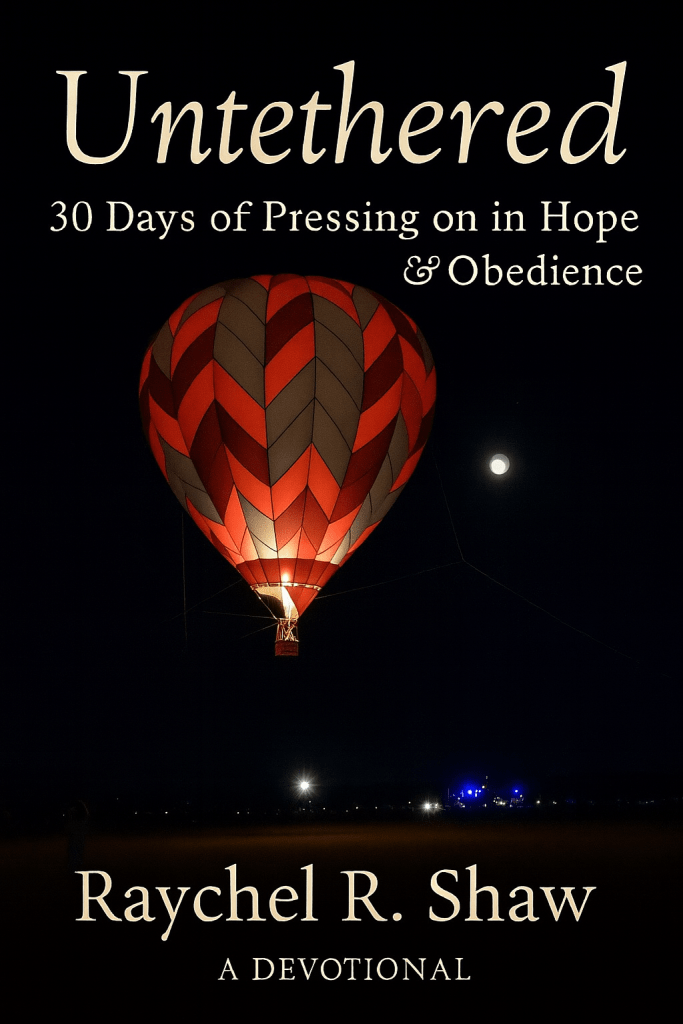
    When I began blogging, it wasn’t for likes or algorithms; (still isn’t) it was a way of processing what God was teaching me in real time. Some of those raw reflections eventually became the foundation for Untethered: 30 Days of Pressing on in Hope & Obedience — a devotional born out of old blog posts and journal entries that carried me through one of the most refining seasons of my life.

    Untethered isn’t long or complicated — it’s simple short devotionals, honest, and rooted in the same kind of conversations I have with God when life feels messy. But since its release on Amazon, my writing time has shifted. I’m still learning how to balance being a writer and a blogger — how to keep writing for publication without losing the heartbeat of why I started writing in the first place.

    And honestly? That tension has been good for my soul. Because slowing down to write here reminds me that I don’t have to produce — I just have to be faithful.

    A Season of Stillness (and Surrender)

    In the middle of that busyness, I felt God nudging me to return to the basics — to the quiet practice of slowing down and listening again. Out of that came Stillness with the Savior, a 24-day guided Scripture journal through the book of Luke.

    Every December, our family reads one chapter of Luke each day from December 1–24, walking through the story of Jesus’ birth and life leading up to Christmas. It’s become one of my favorite traditions — a way to remind ourselves that Christmas isn’t about the rush, but about Emmanuel — God with us. From birth to resurrection.

    Stillness with the Savior grew out of that rhythm. It’s a space to pause, reflect, and put ink to paper as we internalize the truths of Scripture. While we use it during the Christmas season, the reflections are truly evergreen — perfect for any time you need to slow down and realign your heart with His.

    🕯️ Get your copy of Stillness with the Savior:

    Attachment.pngPaperback Edition Attachment.pngKindle Edition

    Why I Keep Showing Up Here

    Even when it’s hard to find time, I keep coming back to this little corner of the internet — because it’s where so much of what I write begins. This blog is my reminder that the process matters just as much as the product.

    If you’ve been juggling your own projects, commitments, and chaos, take this as a gentle nudge: you don’t have to do it all. Just stay tethered to the One who called you in the first place.

    He’ll handle the timing.

    You just keep showing up.

    ✨ Read more:

    📖 Untethered: 30 Days of Pressing on in Hope & Obedience — a devotional to help you hold fast when life feels uncertain.

    🕯️ Stillness with the Savior (Paperback) |

    Stillness with the Savior (Kindle) — a 24-day guided Scripture journal through Luke, perfect for December or any season your soul needs stillness.

  • Do Our Words Really Matter?

    September 23rd, 2025

    Short answer: YES.

    Scripture makes it clear—what we say holds weight. Romans 10:9–10 tells us that “if you confess with your mouth that Jesus is Lord and believe in your heart that God raised Him from the dead, you will be saved.” Our salvation itself is connected to both belief and confession. Words matter.

    Jesus also emphasized this truth in Matthew 12:35 when He warned the Pharisees about blasphemy, (36) “I tell you, on the day of judgment people will give account for every careless word they speak.” That’s sobering. Careless words aren’t harmless—they reveal the heart and have eternal consequences.

    And think about His warning in Matthew 18:6: “But whoever causes one of these little ones who believe in me to sin, it would be better for him to have a great millstone fastened around his neck and to be drowned in the depth of the sea.” For a long time, I thought He was talking strictly about children. But context makes it just as reasonable that He was speaking about anyone young in the faith. That makes me pause. My words can either encourage or discourage, point people to Christ or turn them away.

    This hits especially close in today’s climate. With political debates, cultural battles, and everyday frustrations, it’s easy to let passion get the best of us. I’ve caught myself more than once speaking too quickly or too sharply. And while I may feel “justified” in the moment, the bigger question is: did I represent Christ well?

    As Paul reminds us in 2 Corinthians 5:20, “we are ambassadors for Christ.” That means when people hear me speak—or read my posts online—they’re not just hearing Raychel. They’re also forming an impression of the Christ I claim to follow. That’s a heavy responsibility, but also a powerful opportunity.

    Do our words really matter? Absolutely.

    They matter to God.

    They matter to those listening.

    And they matter for the testimony of Christ.

    Additional Scriptures on the Power of Words

    Here are just a few reminders from God’s Word:

    “Keep your tongue from evil and your lips from speaking deceit.” — Psalm 34:13

    “Death and life are in the power of the tongue, and those who love it will eat its fruits.” — Proverbs 18:21

    “Let no corrupting talk come out of your mouths, but only such as is good for building up, as fits the occasion, that it may give grace to those who hear.” — Ephesians 4:29

    “Know this, my beloved brothers: let every person be quick to hear, slow to speak,

    slow to anger.” — James 1:19

    “Set a guard, O Lord, over my mouth; keep watch over the door of my lips!” — Psalm 141:3

    A Call to Action

    Think about your words today. Are they pointing people toward Christ, or away from Him? Before you speak—or post—ask yourself: Does this reflect Jesus well? Words can build or break, bless or curse. Choose to use yours to shine His light.

    A Prayer

    Lord, set a guard over my mouth and keep watch over the door of my lips. Help me to be quick to listen, slow to speak, and slow to anger. Let my words bring grace to those who hear and reflect the heart of Christ in every conversation. Amen.

  • Two Are Better Than One: Lessons from Our 25th Anniversary

    September 15th, 2025

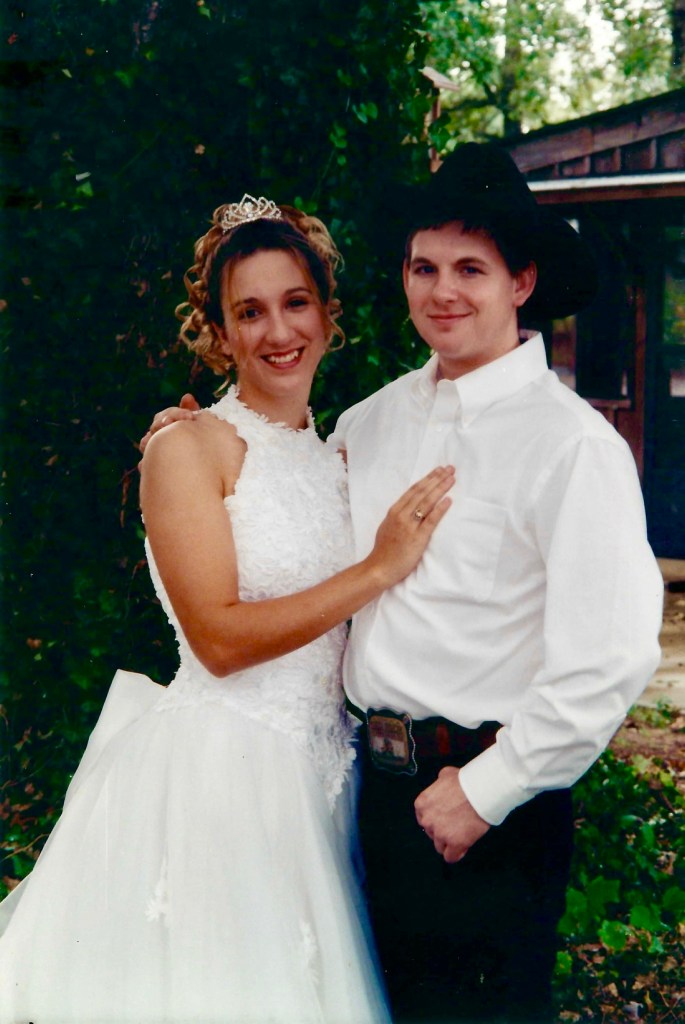
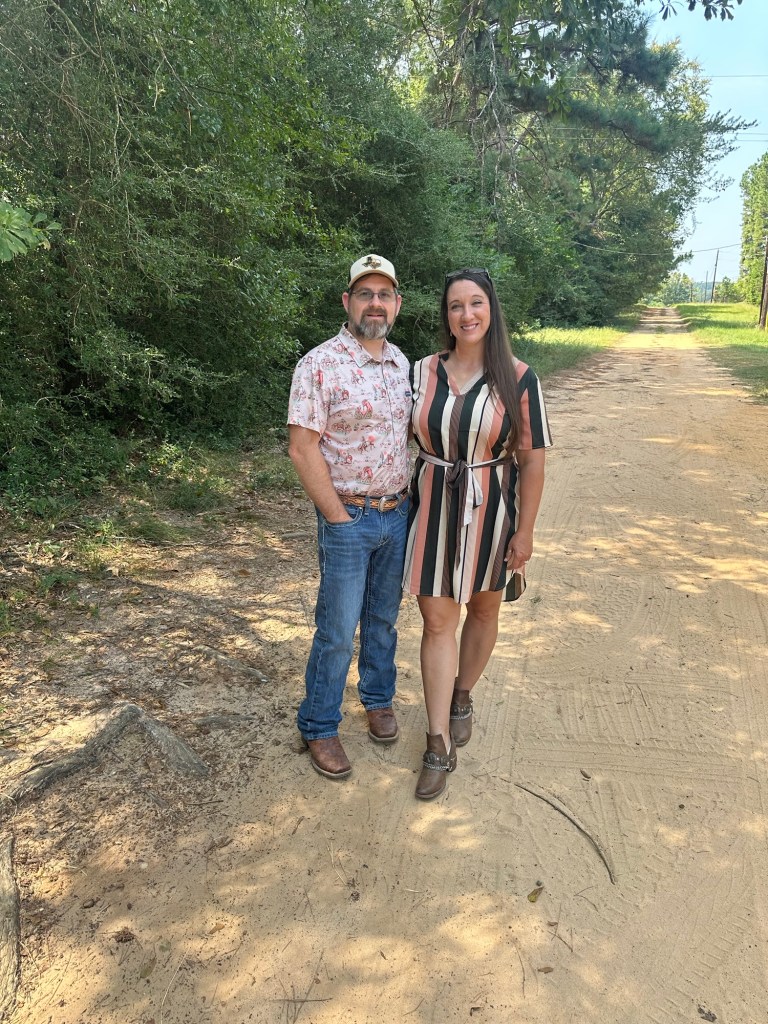
    On Tuesday, September 16, 2025, we celebrate twenty-five years of marriage. That sentence lands with both the weight of time and the lightness of grace. We didn’t arrive here by perfect planning or flawless execution. We arrived here by choosing—again and again—to return to the table, to tell the truth, to forgive, to laugh, and to keep Jesus at the center.

    I used to imagine anniversaries as fireworks and sweeping gestures. Sometimes they are. More often, they’re a Tuesday night with dishes in the sink, someone who needs help with something, a text that says “on my way,” and a quiet moment to look at each other and remember: this is the life we promised to build, one ordinary day at a time.

    1) The real miracle is endurance.

    Falling in love is a spark; staying in love is stewardship. The miracle isn’t that two imperfect people found each other—it’s that they keep showing up for each other. We’ve had seasons when we were shoulder-to-shoulder, charging the same hill, and seasons when we were back-to-back, covering each other from in the midst of life’s battles. God met us in both.

    2) Forgiveness is a rhythm, not a single act.

    We’ve apologized badly, and we’ve apologized better. We’ve learned to say, “I was wrong,” and then give each other room to heal. Forgiveness doesn’t erase consequences, but it does open a door for hope to walk back in. Jesus taught us that. He keeps opening doors we would have nailed shut.

    3) Small is the new grand.

    Grand gestures are wonderful. But the quiet things—the hot coffee, the prayed-for meeting, the “text me when you get there,” the hand on the small of the back at church—those stitch a life together. Love is heaped up in teaspoons.

    4) Unity doesn’t mean uniformity.

    We haven’t always agreed on pace, plan, or paint color. (Can I get an amen?) Unity for us has meant honoring the same mission: to love God, love each other, and love the people He puts in front of us. When we aim our hearts in the same direction, the rest gets easier to sort out.

    5) Laughter is holy maintenance.

    There were years when laughter was thin. Then we remembered how to look for it, invite it, and protect it. Joy isn’t a denial of reality; it’s proof that grace is still at work in it.

    God’s Design for Marriage

    Marriage was never our invention—it was God’s. From the beginning, He set it apart as a covenant, not a contract. His design was that husbands would love their wives as Christ loved the church, and wives would respond with trust and respect, both walking in step with Him.

    I have seen my husband live that design every single day. He has demonstrated unconditional love to me just as God tasked him with. It’s easy to follow a man so full of humility, who demonstrates courage by leading us and others with his heart instead of his head—even when he’s encouraged to do the opposite—because he knows that’s not consistent with the Word of God.

    He is a man I can trust to have the integrity to behave in public the same way he does behind closed doors, in public conversations and private ones. He constantly seeks to build and grow people, even at great cost to himself, never tearing them down or demeaning them.

    He is a true servant leader in word and action—one who doesn’t make decisions to make things easier on himself but easier on those he leads, just as Christ did.

    That is the man God gave me. And that is the design God gave marriage: love that lays itself down, leadership that serves, and a covenant that reflects Christ Himself.

    6) We needed the third strand.

    “Two are better than one… and a cord of three strands is not quickly broken.” (Ecclesiastes 4:9–12) We are not the heroes of our story—Jesus is. When we braided Him into our everyday: our calendars, our money decisions, our parenting, our apologies, our celebrations—that’s when endurance turned into peace.

    A Prayer for Us (and for You)

    Lord, thank You for the gift and grit of marriage. Teach us to serve more than we demand, to listen more than we defend, and to forgive as we’ve been forgiven. Continue to be our third strand—our strength, our wisdom, and our peace. Amen.

    If you’re celebrating an anniversary this year—or clinging to hope in a hard stretch—drop a comment. I’d love to pray for you and cheer you on.

    “What’s the point in raising your hand if you don’t raise it high?” Today, I’m raising mine—high—for the promise we made and the God who’s kept us.

  • I Don’t Need to be a Patriot First

    September 13th, 2025

    Recently I had a conversation with a family member I dearly love and deeply respect, still. The topic turned political—my fault, since I voiced frustration about one of the figures in our current administration.

    That opened the door to a discussion that revealed we were far more politically divided than I realized. At one point, I was asked directly if I had supported the current (Trump) administration. When I admitted I did—even knowing it could sever our relationship—the response was swift:

    “You can’t consider yourself a patriot.”

    That stung.

    But rather than get defensive, I wanted to hear the other side. I asked for evidence. I asked where the information came from that supported such a claim against me. Because the truth is, I’ve been looking—and I haven’t seen it.

    Here’s what I’ve realized: I’m not angry. People are entitled to their opinions. And just because that’s someone’s opinion of me doesn’t make it true.

    What I’ve dwelled on most is this—while I am grateful to live in this country, and while I do believe America is a great nation (especially having lived in and visited other countries), I don’t actually care if people think of me first as a patriot.

    My U.S. passport proves my earthly citizenship. My Texas driver’s license confirms my state residency.

    I also recognize that my freedom to say this—to write, speak, and live out my faith—among many other freedoms-was safeguarded by the blood of countless men and women who gave their lives in service to this country. Because of their sacrifice, and because of the protections guaranteed by our Constitution, I still have the legal right to speak what I believe, even when people who think like me are ridiculed, silenced, or persecuted.

    That same freedom also extends to those who don’t think like me. They, too, have the right to speak, write, and live out what they believe—even when we disagree.

    I don’t take those soldiers’ sacrifices, past and present lightly. I honor their courage and the high price they paid. I believe that I have voted and will continue to vote in alignment with the beliefs I ascribe to in mind. That freedom points me to something greater…

    My residency is in Heaven.

    That eternal home was purchased for me in blood by Jesus Christ when He died on the cross for my sins—and yours too. He rose from the grave defeating death and has prepared a place for His followers in Heaven. That reality sets my priorities:

    My first allegiance is to God. My second allegiance is to my family. My third and fourth allegiances are to this country and this state.

    I am a citizen of Heaven, and I want my behavior here on earth to bear the weight of that truth, run through the filter of eternity. I’m not striving to be a great American or a great Texan. I’m striving to be a faithful citizen of Heaven—because if I live that way, then perhaps I’ll also be both a better American and Texan.

    At the end of the day, that’s what I stand for.

    I support the truth of the gospel of Jesus Christ, the inerrancy of His Word found in the 66 books of the Bible, the complete and divinely inspired revelation of God. I believe we are all made by Him and in His image—whether we want to admit it or not—and we should treat each other accordingly.

    That is my first allegiance. That is my identity. That is where my citizenship rests.

    And I’m getting homesick for that perfect place.

    👉 “I’d love to hear from you—where do you place your first allegiance? what does being a citizen of Heaven mean to you? Share your thoughts in the comments.”

←Previous Page
1 2 3 4 5 6 … 10
Next Page→

Blog at WordPress.com.


Loading Comments...
 

    • Subscribe Subscribed
      • Raychel Writes
      • Join 55 other subscribers
      • Already have a WordPress.com account? Log in now.
      • Raychel Writes
      • Subscribe Subscribed
      • Sign up
      • Log in
      • Report this content
      • View site in Reader
      • Manage subscriptions
      • Collapse this bar