Proverbs 26: Wisdom Isn’t Impressed by Potential
Proverbs 26 is a chapter of similitudes—picture after picture meant to slow us down and make us think. Wisdom here doesn’t come wrapped in soft language. Instead, it shows us patterns of behavior and then draws a straight line to the outcomes of engaging with them.
This chapter is not abstract. It is deeply practical.
Over and over again, Solomon describes the fool, the lazy, and the one who delights in conflict, not to mock them—but to warn us about the cost of proximity.
“Like snow in summer and like rain in harvest,
So honor is not fitting for a fool.” (v.1, NASB)
Wisdom begins with discernment. Proverbs 26 reminds us that character matters more than capability. A person may be talented, persuasive, or confident—but without wisdom, placing them in a position of responsibility causes damage, not progress.
The Fool: Predictable, Not Mysterious
One of the mistakes we make is treating foolish behavior as unpredictable. Proverbs 26 does the opposite—it shows us that foolishness follows patterns.
A fool returns to folly the way a dog returns to what made it sick (v.11). Not because they don’t know better—but because they refuse correction. That refusal doesn’t just affect them; it affects anyone who entrusts them with responsibility, listens to their counsel, or hires them for work.
“Like an archer who wounds everyone,
So is he who hires a fool or who hires those who pass by.” (v.10)
This is a sober warning. Hiring or empowering the wrong person doesn’t stay contained. The consequences ripple outward.
The Lazy: Not Harmless, Just Slow Damage
Again, the lazy person makes an appearance—but notice how Scripture treats laziness here. It’s not framed as rest or exhaustion. It’s framed as excuses, delay, and wasted potential.
“The lazy one buries his hand in the dish;
He is weary of bringing it to his mouth again.” (v.15)
Laziness isn’t always loud. Sometimes it’s subtle—unfinished tasks, half-effort, and constant reasons why today isn’t the day. Proverbs doesn’t present laziness as neutral; it presents it as self-deceiving and costly.
Conflict: Fed, Not Found
One of the most important teachings in Proverbs 26 is about conflict. Scripture makes a clear distinction between necessary confrontation and unnecessary strife.
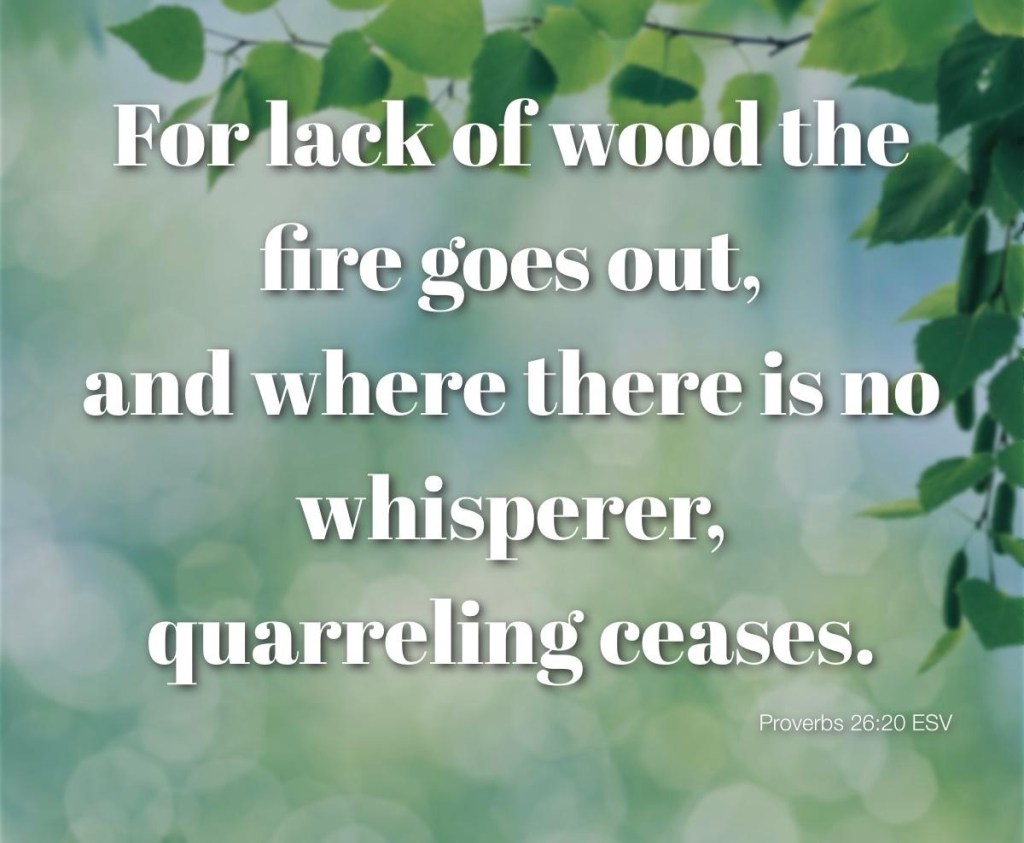
“For lack of wood the fire goes out,
And where there is no whisperer, contention quiets down.” (v.20)
Conflict doesn’t always need to be confronted head-on. Sometimes it needs to be starved. Gossip, stirring words, and subtle jabs are fuel. Remove the fuel, and the fire loses its power.
This chapter reminds us that not every argument deserves our response—and not every voice deserves our attention.
What We Might Miss
Proverbs 26 quietly teaches us that wisdom includes knowing when not to engage. Twice in this chapter we are told to both answer and not answer a fool (vv.4–5). That tension isn’t a contradiction—it’s discernment.
Wisdom asks:
Will my words clarify truth? Or will they entangle me in foolishness?
Knowing the difference requires humility and restraint.
Closing Reflection
Proverbs 26 presses us to evaluate not just our actions, but our associations, our responses, and our patterns. Wisdom is not proven by what we know—it is revealed by how we act, who we trust, and when we choose silence over reaction.
This chapter calls us to live attentively, interact discerningly, and remember that character—not charisma—shapes outcomes.
 Raychel Writes