Proverbs 9 — When Wisdom Speaks for Herself
There comes a point in parenting when you stop narrating every decision for your child.
You’ve warned them.
You’ve taught them.
You’ve repeated yourself more times than you can count.
And eventually… you step back.
That’s what Proverbs 9 feels like.
For eight chapters, Proverbs has largely been framed as a father speaking to his son. My son… listen… keep… do not turn aside. It is pastoral, repetitive, and protective by design. This is covenantal instruction — wisdom being formed, not merely transferred. But in Proverbs 9, the voice shifts. The father recedes, and Wisdom herself takes the floor.
This isn’t subtle. It’s intentional.
Literarily, Proverbs 9 functions as a culmination and a hinge. Everything before it has been preparing the reader for this moment, and everything after it (beginning in chapter 10) shifts into short, distilled sayings. The long-form instruction gives way to choice. Formation gives way to responsibility.
Wisdom doesn’t whisper. She doesn’t hide in the private spaces. She builds a house — described as having seven pillars, a number that consistently communicates completeness and stability in Scripture. She prepares a feast. She sends out messengers. She calls from the highest places where her voice cannot be missed.
“Come,” she says.
Not after you clean yourself up.
Not after you mature a little more.
Just — come.
And what strikes me is this: by now, the reader is no longer being taught how to recognize wisdom. We are expected to already know her voice. The instruction has been sufficient. The warnings have been clear. Now comes the moment of response.
This mirrors spiritual maturity.
Early faith often leans heavily on borrowed voices — parents, pastors, teachers. And those voices matter deeply. God uses them. But eventually, wisdom must be encountered directly. The question becomes not what have you been taught, but who will you listen to when competing voices call?
Proverbs 9 makes that confrontation unavoidable by placing Wisdom and Folly side by side.
Folly is not subtle either. She is loud. She is seductive. But she is also empty. She does not build; she sits. She does not prepare; she steals. What she offers feels exciting precisely because it costs nothing up front. Stolen water. Secret bread. Hidden consequences.
And Scripture tells us plainly — her guests do not know that the dead are there.
Both women call to the same audience:
the simple,
the uncommitted,
the still-forming.
Wisdom offers life. Folly offers death. And neither disguises the nature of their invitation.
Then we arrive at the theological center of the chapter:
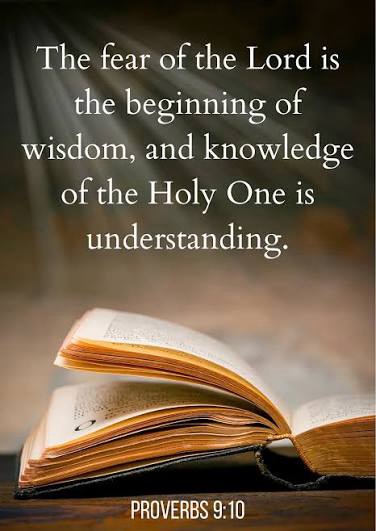
The fear of the Lord is the beginning of wisdom,
and the knowledge of the Holy One is insight.
This verse anchors the entire book. Wisdom is not intellectual achievement. It is not moral intuition. It begins with right orientation toward God. The fear of the Lord is reverent submission — recognizing God as holy, authoritative, and good. Wisdom does not originate in us. It is received through humility.
This is why Proverbs cannot be reduced to self-help. Detached from the fear of the Lord, its sayings lose their foundation. What remains may sound practical, but it will not lead to life.
And this brings me back to motherhood.
As mothers, we spend years shaping hearts and habits. We explain. We warn. We model. We correct. We hope that what we’ve poured in will one day stand on its own when we are no longer present to narrate the moment.
Proverbs 9 feels like that moment.
The father has spoken. Wisdom now speaks for herself. And the reader must choose.
So today, I’m asking myself the same question I’ve asked my children in a hundred different ways:
Who are you listening to?
Because wisdom is still calling.
She still stands in the open.
She still offers life.
The question isn’t whether she’s speaking.
It’s whether we recognize her voice —
and whether we’re willing to follow it when no one else is telling us what to do.
 Raychel Writes